


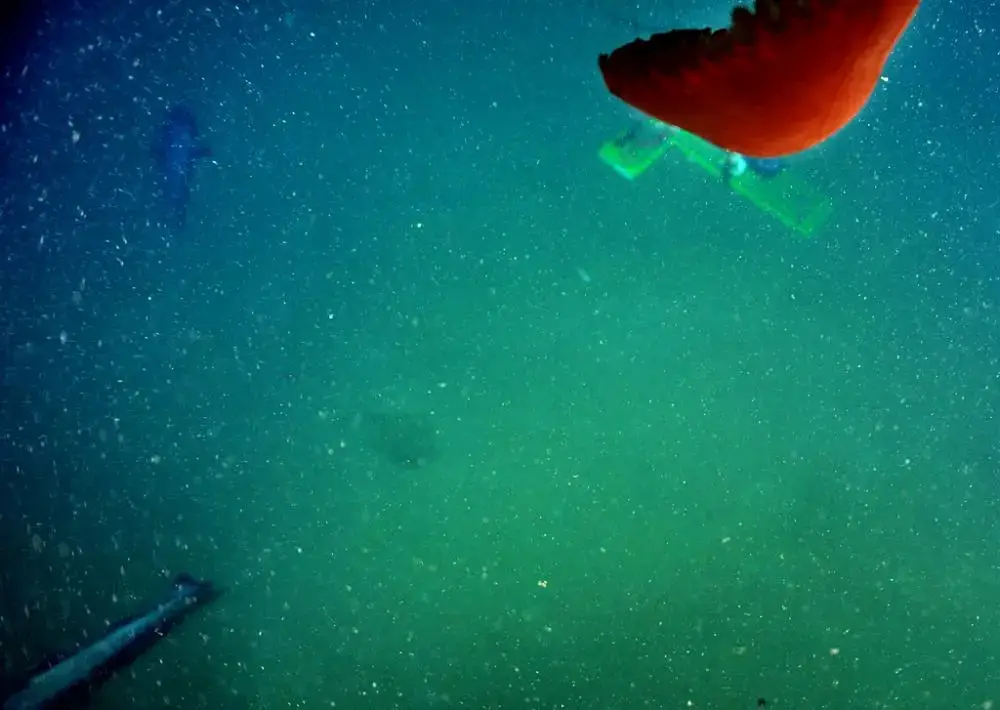
Ocean Blue receives so many questions everyday from our members, and one question we really enjoy answering is: does it snow in the ocean?
According to the information provided, the article was last updated on November 5, 2020, as indicated by the following article: “The article’s last update was documented on November 5, 2020, and the author of the article is Karisa Arterbury
The short answer is yes– there is such a thing as marine snow and snow on the ocean, but it’s not the snow you’re thinking of when you build a snowman or go skiing.
Marine snow refers to the “shower of organic material falling from upper waters to the deep ocean,” according to the National Oceanic and Atmospheric Administration (NOAA), resembling “snowflakes” that grow to several centimeters in diameter as they accumulate matter on their way down to the ocean floor. But not all of the marine snow makes it to the ocean floor.
This “organic material” serves as a fruitful source of nourishment for marine wildlife, and NOAA’s measurements have shown there is plenty of carbon and nitrogen present in marine snow to satisfy all the species below the ocean’s surface.
Marine snow refers to the ‘shower of organic material falling from upper waters to the deep ocean,’ according to the National Oceanic and Atmospheric Administration (NOAA). It resembles ‘snowflakes’ that grow in size as they accumulate matter on their way down to the ocean floor, some reaching several centimeters in diameter. But what exactly makes up this organic material? Well, it includes a variety of components.
Marine snow consists of organic material such as dead animals and plants, fecal matter, sand, soot, and other inorganic dust. These diverse elements contribute to the appearance and composition of marine snow, giving it a unique and intriguing nature. Interestingly, not all of the marine snow makes it to the ocean floor. This ‘organic material’ serves as a fruitful source of nourishment for marine wildlife, providing essential nutrients for various species that reside below the ocean’s surface.
NOAA’s measurements have revealed that marine snow contains an abundance of carbon and nitrogen, making it a valuable resource for sustaining marine ecosystems. By comprehensively understanding the composition of marine snow, we gain insight into its role as a vital component of the oceanic food chain. Its complex mixture of organic matter, along with its ability to support a diverse range of marine life, highlights the significance of marine snow in maintaining the delicate balance of our underwater ecosystems.
According to the Smithsonian, marine snow is beneficial for marine life like the vampire squid, which has adapted over time to catch and consume the particles, and eel larvae during their early development period. Whatever is not eaten turns into a “thick, smooth ooze” on the ocean floor, collecting approximately 6 meters of continually falling marine snow every million years– that’s about 815 million tons of carbon each year.
So, while marine snow is a fairly new concept to scientists, we can definitely confirm that “many marine animals feed on this incredibly nutritious material along the way, making marine snow the backbone of many deep-sea creatures diets and food webs.”
To learn more about marine snow, you can find valuable information on the NOAA Ocean Explorer website. They provide a comprehensive resource on various aspects of marine science, including marine snow. Browsing through their content, you will discover a wealth of knowledge on this fascinating phenomenon.
How Much Of The Ocean Floor Is Covered By Oozy Mud?
Approximately 75% of the deep ocean floor is covered in a dense, velvety sediment commonly referred to as muddy ooze. Oozy meaning is like slick, slime or sticky mud from years of sediments and moisture.
Whatever is not consumed from marine snow in shallower waters undergoes a fascinating transformation as it sinks to the ocean floor. This unutilized material gradually becomes part of a vast ‘thick, smooth ooze’ that blankets the ocean floor, covering approximately three-quarters of the deep ocean. Through the process of biological activity, this ooze further decomposes the remaining organic matter.
Remarkably, the accumulation of marine snow in the form of this ooze increases by about six meters every million years. Considering this rate, an astonishing estimation of approximately 815 million tons of carbon is collected on the ocean floor each year.
This continuous cycle of marine snow sinking and transforming into the ooze contributes to the intricate dynamics of the underwater ecosystem, ensuring the efficient recycling and decomposition of organic matter in the deep ocean.
Find out ways you can give back to the ocean and how to lower single use plastic. Let’s work together to protect marine snow, and volunteer with Ocean Blue Project today!

