
5 Unique Facts About the Banyan Tree
By Brenna Ellis
You may not know their name, but you’ve surely seen photos of them. The Banyan Tree (Ficus benghalensis) is a majestic tree. With thick woody trunks, vast canopies, and their signature root system they’re hard to miss.
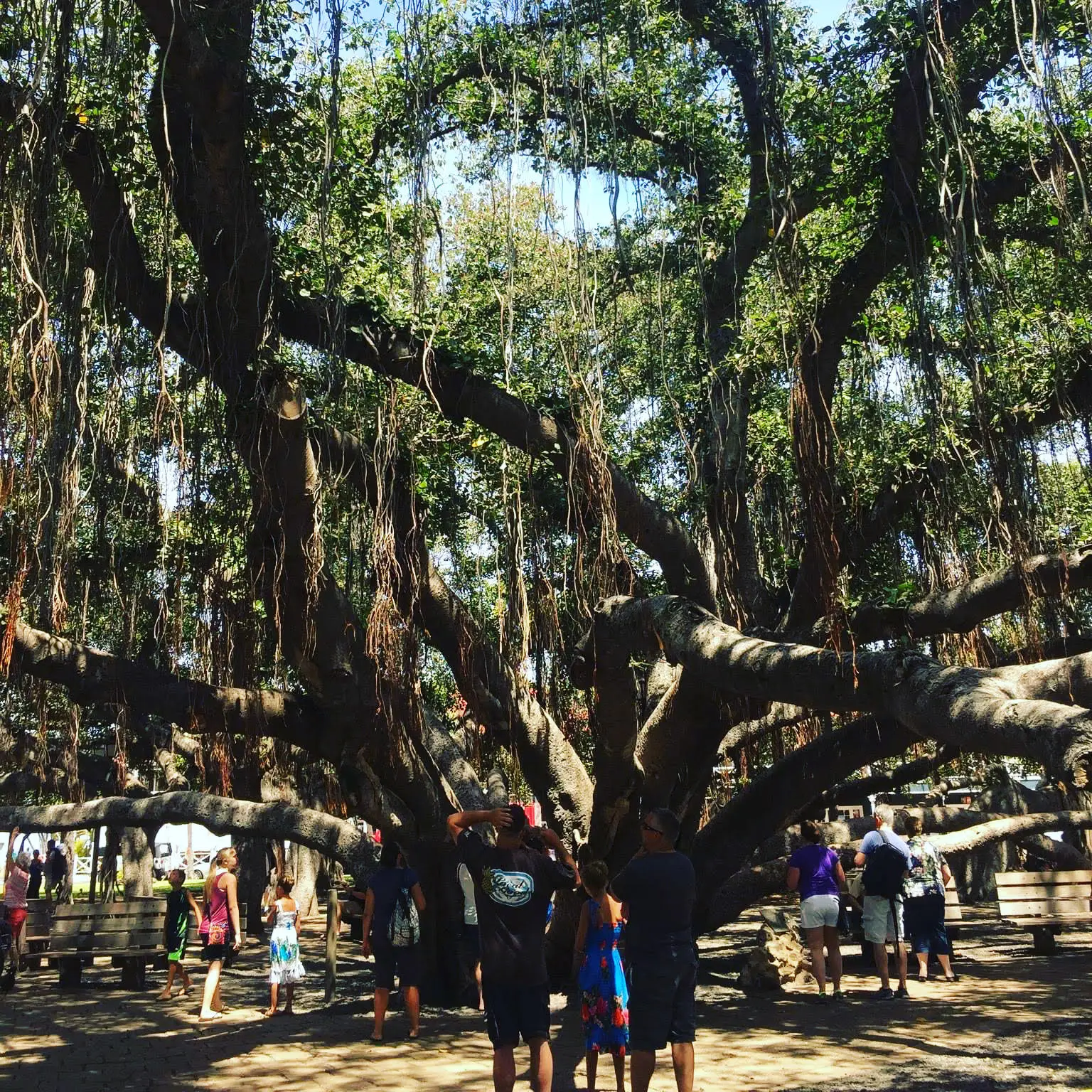
Though common in Hawaii the Banyan tree is native to India. It was first brought to the Hawaiian islands in 1873 by missionaries from India. The trees have become commonplace in Hawaii and they are viewed as a prominent feature on the islands.
The Banyan tree, along with its associated flora, has a long history in religion, medicine, and pop culture.
Let’s Look at 5 Interesting Facts About This Amazing Tree.

1.The Banyan Tree is the Hawaiian Version of a Hollywood Star
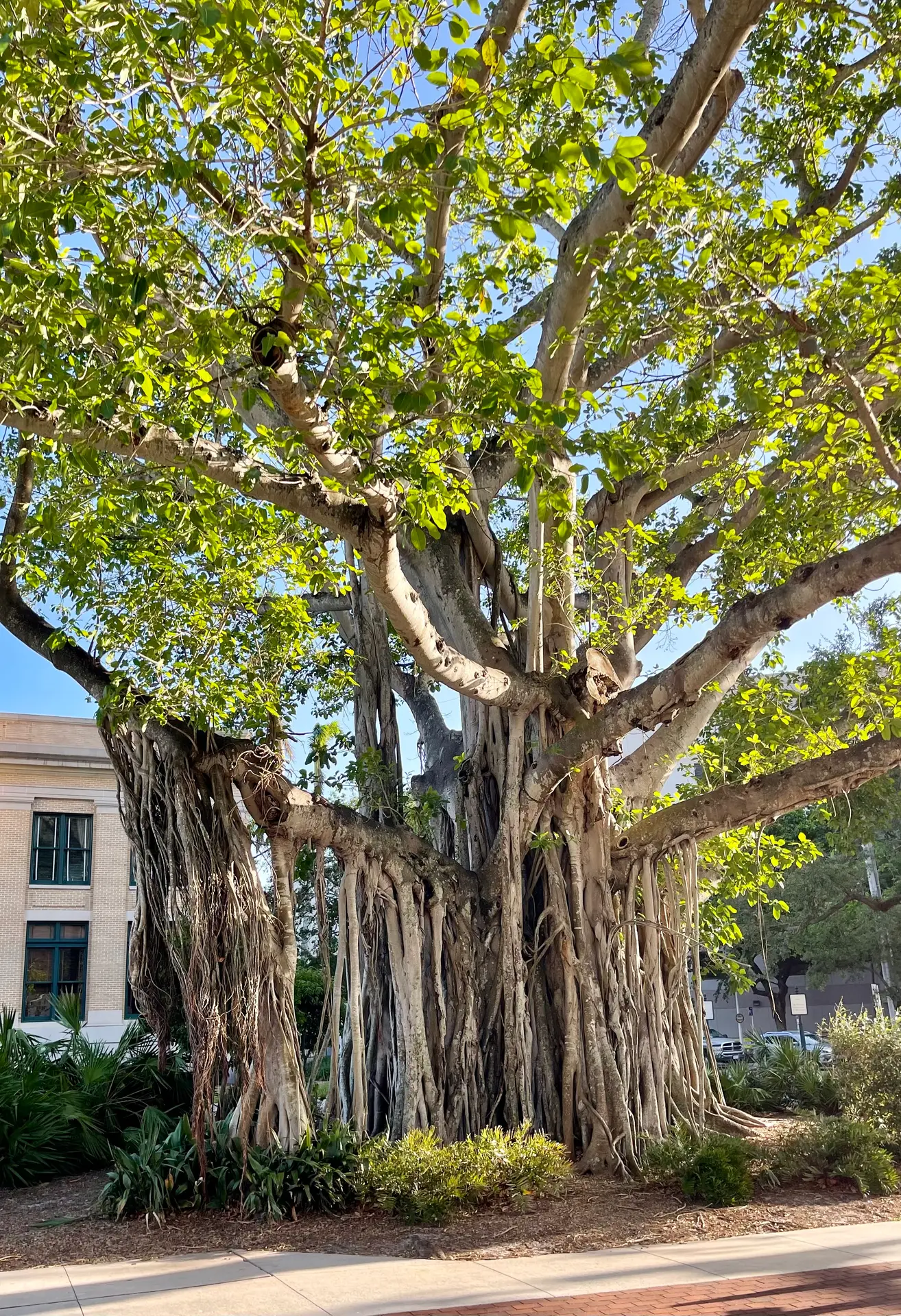
The Banyan got a big boost in popularity when one was planted in 1933 by a Hollywood producer filming on the islands. This single tree led to the creation of Banyan Tree Drive. This grove of trees, planted by prominent figures, has become a significant cultural landmark. For years after this first tree was planted many prominent guests and Hawaiian royalty have planted trees lining this street.
Nowadays the drive leads to a fancy hotel and golf course and visitors love to stop along the way to see who planted which tree. Tidal waves have uprooted some of the trees over the years but there are still 50 standing today.
From Franklin D. Roosevelt to Amelia Earhart and “Babe” Ruth the drive is lined with trees planted by greats like these. If you were important on the islands or the US in the 1930s-1950s you likely have a tree and plaque along this road.
If you are in Hilo don’t miss this epic Hawaiian version of the Hollywood stars.
2.The Strangler Fig, the Broadest Tree in the World
In a garden outside of Kolkata India is the broadest tree in the world, known as The Great Banyan. This tree is about 250 years old and it covers almost 5 acres—that’s 4.5 football fields. The garden consists of this one tree and it provides an entire ecosystem on its own.
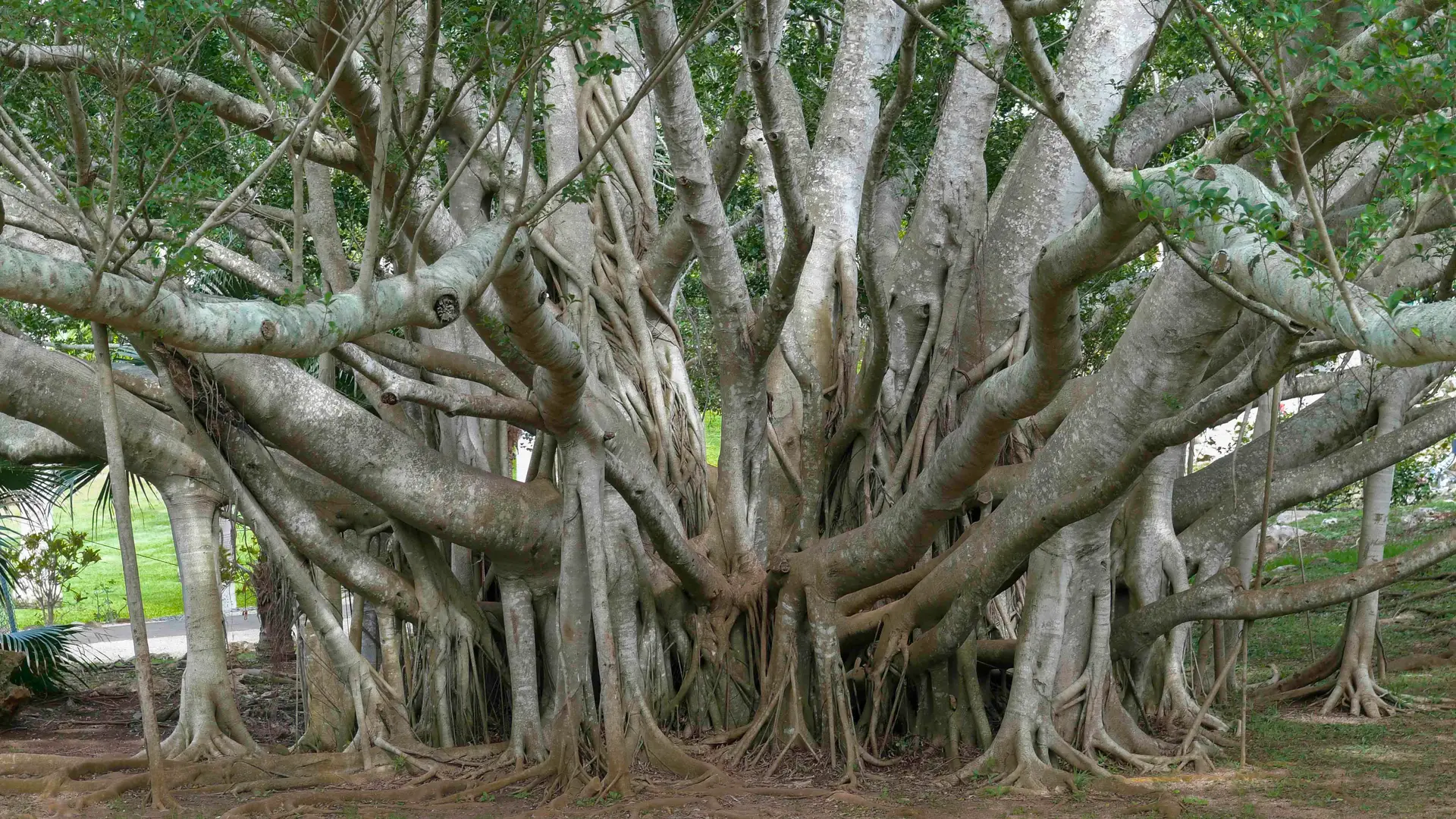
The Banyan tree can grow so broad because of its root system. Rather than growing underground, its roots grow from its branches, so it’s always growing outward, creating a vast canopy that casts a shadow, embodying both darkness and light. This duality reflects the complexities of existence and the interconnectedness of different life experiences.
Banyans, like other Ficus trees, have a unique form of pollination. These trees provide shelter and fruit for a specific kind of wasp that is their only pollinator. Without these specific wasps, the trees couldn’t produce fruit for birds.
Also known as the strangler fig, its seed sprouts and grows on other trees.
As the seeds of a Banyan grow on its host, it drops its roots to the ground and they slowly grow around the other tree. After years of growth, the host will be ‘strangled’ and die.
The host dying is not all bad news. Once it has decayed it leaves a hollowed-out place where it once stood. This area becomes a place for animals and birds to build their homes.
3.Banyan Tree’s Incredible Medicinal Properties
Almost every piece of the Banyan tree has its own medicinal properties. Pieces of the tree have been used for centuries in ayurvedic medicine to treat illnesses and inflammation.
Name your ailment and a piece of the Banyan tree likely has a source of relief.
These are a few of its medicinal properties:
Leaves have many uses including relieving diarrhea and dysentery. They can be used topically on growths to break them down. The leaves can also be brewed into alcohol, and used for women during pregnancy to strengthen uterine muscles.
The bark can be used to control diabetes.
Paste from the roots to help tighten and firm up skin. The roots themselves can be used to clean teeth and fight gum disease.
The milky juice of the tree (the latex) can be used to kill warts and combat inflammation.
4.The Banayan Tree Has a Religious History
The banyan tree holds a profound place in the religious tapestry of Hinduism and Buddhism. In Hinduism, this majestic tree is revered as sacred and is closely associated with the god Brahma. It is often depicted in Hindu mythology as a symbol of spiritual growth and enlightenment, believed to be the dwelling place of the gods. The banyan tree’s sprawling canopy and intricate aerial roots are seen as representations of the interconnectedness of all life, embodying the essence of spiritual unity.
In Buddhism, the banyan tree is equally significant. It is under a banyan tree, known as the Bodhi tree, that Buddha is said to have attained enlightenment. This momentous event in Buddhist history underscores the tree’s symbolic representation of wisdom and spiritual awakening. The banyan tree’s unique structure, with its extensive network of roots and branches, mirrors the journey of growth and enlightenment, making it a powerful symbol in both religions.
5.The Modern Banyan
In the modern world, besides Banyan Drive in Hawaii, it shows up in a variety of places. From brand names to a giant resort chain, the name Banyan is used to hint at its historical importance.
Though ficus trees have become popular house plants, the Banyan is best left out of the home. Indian architecture practices consider them bad luck to have near or in your home. Beyond that, the very nature of the Banyan tree makes it a difficult house plant.
Preserving the Banyan
The Banyan tree is important for so many reasons. It’s a sustaining life force within its habitat and for the entire globe. Because of the large number of fruit it produces, it sustains many birds, bats, and other critters. Additionally, the Banyan tree helps us connect with nature and the community, serving as a symbol of how we can foster relationships and understanding in our lives.
It’s also essential to preserve the Banyan Tree because of its big leaves and fast canopy. It’s one of the top oxygen suppliers among trees—giving life to our planet. We must protect the trees we have while planting more.
Characteristics of the Banyan Tree
Understanding Its Unique Physical Traits
The banyan tree is a marvel of nature, distinguished by several unique physical traits that set it apart from other trees. One of its most remarkable features is its aerial roots. These roots grow from the branches and descend to the ground, creating a network that can spread over a vast area. This adaptation allows the banyan tree to absorb nutrients and water efficiently from the surrounding soil, enabling it to thrive in diverse environments.
The banyan tree’s canopy is another extraordinary characteristic. Its sprawling network of branches can cover a large area, providing ample shade and shelter. This extensive canopy supports a wide range of plants and animals, making the banyan tree a keystone species in many ecosystems. The tree’s ability to spread its roots and branches so widely not only supports its own growth but also fosters a rich and diverse habitat for other forms of life.
Relationship with Other Trees
How the Banyan Interacts with Its Environment
The banyan tree’s relationship with its environment is both complex and fascinating. Its aerial roots, which grow into the soil, can compete with other plants for nutrients and water. However, these roots also provide structural support, allowing the banyan tree to coexist with other trees and plants. The banyan tree’s expansive canopy offers shade and shelter, creating a microhabitat where other plants can thrive, even in conditions that might otherwise be too harsh.
Moreover, the banyan tree’s roots play a crucial role in stabilizing the soil and preventing erosion. This function is vital for maintaining the health and balance of the ecosystem. By anchoring the soil, the banyan tree helps to preserve the integrity of the landscape, supporting the growth of other plants and trees. In this way, the banyan tree contributes to the overall diversity and resilience of the natural world, highlighting its importance as a cornerstone of its environment.
By understanding these unique aspects of the banyan tree, we can better appreciate its role in nature and the intricate web of life it supports.
What You Can Do to Help


At Ocean Blue Project we’re working to clean up the beaches, Florida mangroves and ocean from plastic pollution. We host a variety of cleanups along coastlines to get communities engaged with their local beaches.
By cleaning up the plastic waste we’re helping protect our waterways and ocean for the sake of all living beings. But our impact wouldn’t be possible without volunteers—and we would love for you to get involved! You can find out about scheduled cleanups here.
If you don’t see one organized in your community we would love to help you get one started. To learn more about how you can lead your community in a clean up visit our site and let’s make a difference together.
Author Bio: Brenna Ellis is a writer based in Missoula Montana. Receiving a bachelor’s degree in environmental studies she is always looking for ways to educate others in order to protect the planet. When not writing about environmental education she loves writing for brands that promote inclusion in the outdoors.
The religious significance, medicinal properties, and Hawaiian popularity of the amazing Banyan tree.
Maui’s Beloved 150 year old Banyan Tree in Hawaii