
Plastic and Ocean Pollution Facts

By Angela Ricks
There is an unimaginable amount of plastic in the ocean. But exactly how much plastic is in the ocean? The oceans contain 75-199 million tons of plastic waste, with 33 billion pounds of plastic entering the marine environment every year.
How did this happen, and what are the solutions to plastic pollution in the ocean?
Why is there so much plastic in the ocean?
Much of today’s ocean pollution is due to plastic. Yet this big plastic problem has not existed for most of human history. Commercially manufactured plastic is less than 100 years old.
But in the 100 years plastic has been around, it has caused massive problems for our oceans. According to UNESCO, eight to 10 million metric tons of plastic end up in the ocean each year.
Most of the plastic in the ocean comes from littering. But a lot of it also comes from industrial fishing and manufacturing.
Plastic is (almost) forever
The amount of plastic in the ocean is alarming. And it gets more worrisome: plastic usually takes 500–1000 years to degrade. So once plastic is in the ocean, it will not degrade during our lives or even during our grandkids’ lives.
Tiny microplastics, bigger problems
Even when plastic does degrade, its smaller particles cause new issues.
The origin of microplastics
These smaller particles are microplastics.
National Geographic gives us a definition for microplastics. They are “plastics less than five millimeters (0.2 inches) in diameter—smaller than the standard pearl used in jewelry.”
These tiny particles come from 2 primary sources.
- Primary microplastics. These particles come from commercial products. Examples are makeup, fishing nets, and clothing.
- Secondary microplastics. These particles come from plastics that break down into microplastics.
Both types of these particles are present in the ocean, which is bad news for the ocean ecosystem.
Microplastics are bad news

There is currently no statistic estimating the amount of microplastic in the ocean. However, we know that 89% of microplastics end up as environmental waste.
Unfortunately, the tiny plastic particles are not harmless. Scientists are still learning more about microplastics and their effects on the ocean. Still, current studies suggest they harm the ocean ecosystem.
A 2020 scientific article says that microplastics hurt many ocean organisms. Crustaceans, mollusks, and fish may be groups affected by microplastics. Because of microplastics, these animals may change their behavior, die, or have difficulty reproducing.
Although marine microplastics’ effects are still poorly understood, most researchers agree that plastic pollution harms ocean life.
How many sea animals die from plastic?

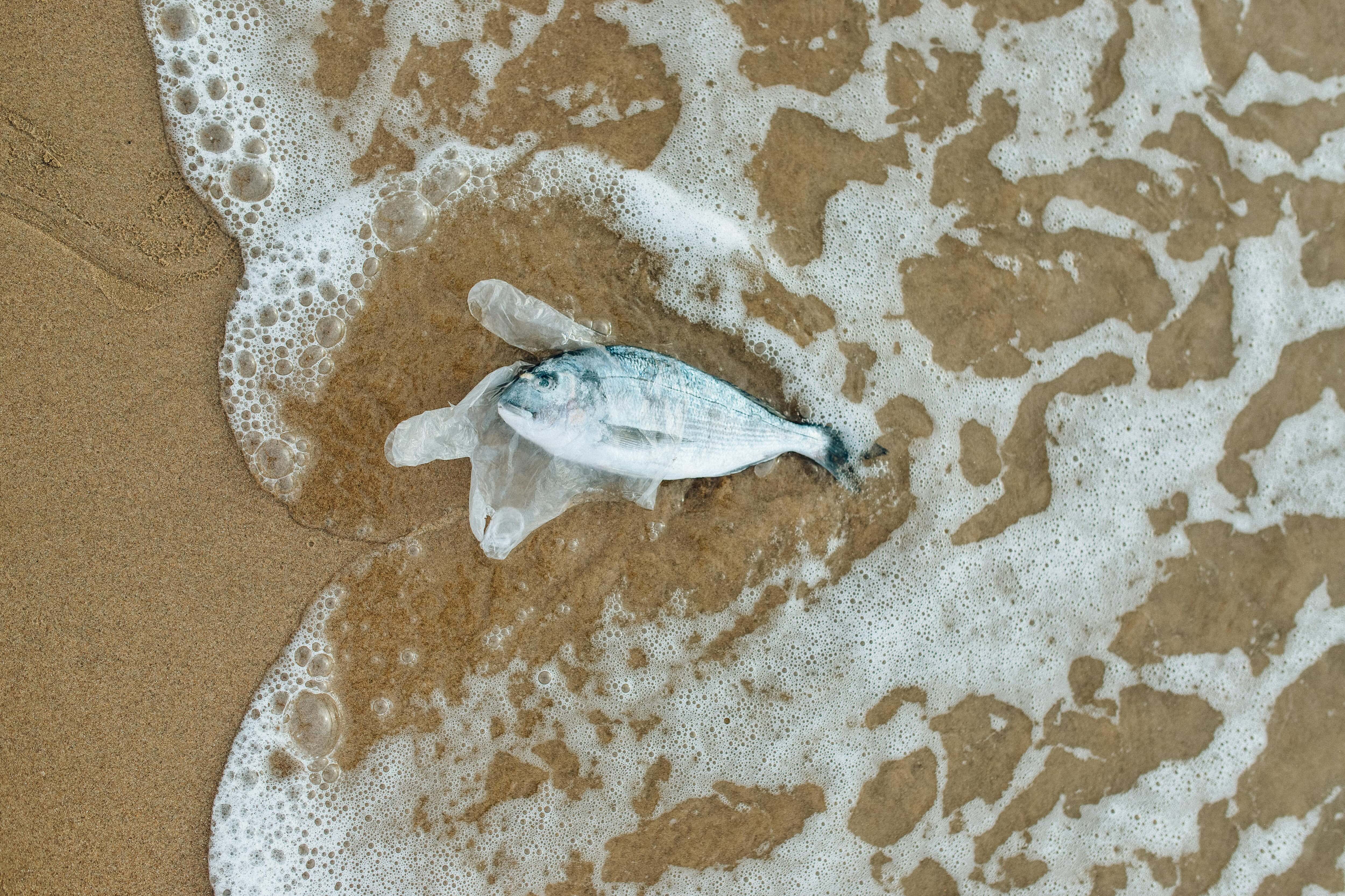
Microplastics and plastics are hitting the ocean hard. One million or more marine animals die in the ocean each year due to plastic pollution.
Ocean life at all levels of the ecosystem is harmed by plastic. Phytoplankton, coral, birds, turtles, and sharks are impacted by plastic pollution.
Phytoplankton
The National Ocean Service says phytoplankton are vital in the ocean and human ecosystems. These microscopic marine algae are food for many sea creatures.
Beyond being a food source, phytoplankton are the world’s greatest carbon producers. Phytoplankton produce 50-80% of the Earth’s oxygen through photosynthesis. These little organisms are essential to human and ocean life.
However, a 2023 scientific review reports that plastic damages even small sea creatures. Phytoplankton often attach to microplastics, which can damage their photosynthesis and cells.
Phytoplankton are essential to ocean and human life. And microplastics threaten the well-being of these little organisms.
Coral
Microplastics also affect coral. A 2018 study in ScienceAdviser concluded that plastic can increase coral disease. First, a coral comes in contact with plastic. Then, its chances of disease increase from 4% to 89%.
Corals are already struggling due to climate change, and now, with plastic in the mix, they are at higher risk.
Seabirds
Plastic doesn’t only affect animals in the ocean. Seabirds are impacted by plastic pollution. An estimated one million birds die as a result of plastic every year.
Birds often confuse plastic for prey. They frequently eat plastic, which can have fatal results. Plastic reduces the volume of the stomach, which can lead to starvation. Eating plastic can also hurt kidney function, stunt growth, and inhibit cholesterol and enzymes.
Learn more about plastic and its impact on seabirds.
Turtles
Turtles often confuse plastic debris with jellyfish. And now, more than half of the world’s turtles have eaten plastic, according to Clearwater Marine Aquarium.
Once turtles have eaten plastic, their digestive tracts can become blocked. The result isn’t pretty: these reptiles often starve or die.
Sharks
The story is similar for sharks. In a 2020 study, 67% of sharks analyzed had ingested plastic or plastic particles. Scientists are still discovering what eating plastic does to sharks.
While eating plastic may not directly kill sharks, other plastic pollution impacts sharks. Hundreds of sharks have been caught in drifting nets or plastic waste. This entanglement can impact the sharks’ quality of life and lead to death.
Learn more about plastic and its impact on sharks.
How does ocean microplastic impact humans?
Animals aren’t the only ones harmed by ocean microplastic. Humans may be, too.
Fish eat plastic, and then we eat fish
Fish eat plastic, but humans eat fish. So, humans eat microplastics when they eat seafood. A 2023 microplastics review notes that the human digestive tract can absorb microplastics.
Absorbing microplastics can damage or kill cells. In other words, microplastics harm our cells, and the chemicals used in microplastics can harm our bodies.
Scientists have not concluded if microplastics are a risk to human health.
However, more plastic enters our waters, and microplastics will only increase. If these tiny plastics build up in our bodies, they could harm human health.
Today, there isn’t a magic cure for microplastics in the ocean. But we can work every day to make our oceans cleaner.
What can we do about plastic in the ocean?
 Plastic in the ocean is a big problem that one person alone cannot solve. But there are small solutions that you can do to help. Every little change you make helps support a future with less ocean pollution.
Reduce single-use plastics
Try to use less single-use plastic. Less plastic use helps prevent plastic from entering the ocean. Make reusables your best friend!
- Use a reusable water bottle you already own
- Use reusable metal or glass straws
- Bring your reusable shopping bags to the store
For more ideas on how to reduce single-use plastic, check out the Green Living Toolkit.
Clean up trash on the beach
If you live near a beach, pick up trash each time you visit the ocean. Try to pick up one or more pieces of plastic each time.
Each piece of trash you remove makes the ocean safer.
Take part in a beach cleanup
Take trash cleanup a step further with an organized beach cleanup. Join other ocean lovers to clean up a specific beach area.
Find a beach cleanup near you, or host your own with Ocean Blue Project.
Donate to Ocean Blue Project
When you donate to the Ocean Blue Project, you help us remove plastic from the ocean. Every dollar donated removes 5 pounds of plastic.
Become an Ocean Blue Project donor.
Immediate action on ocean plastic is crucial
Plastic in the ocean is a pressing issue that demands immediate action. By changing our actions and supporting ocean cleanup, we can help save our oceans.
Author Bio: Inspired by her love of the water, Angela uses her three years of content writing experience to educate others about our oceans. She hopes to help preserve the ocean for future generations to love.
