

The Great Pacific Garbage Patch Explained
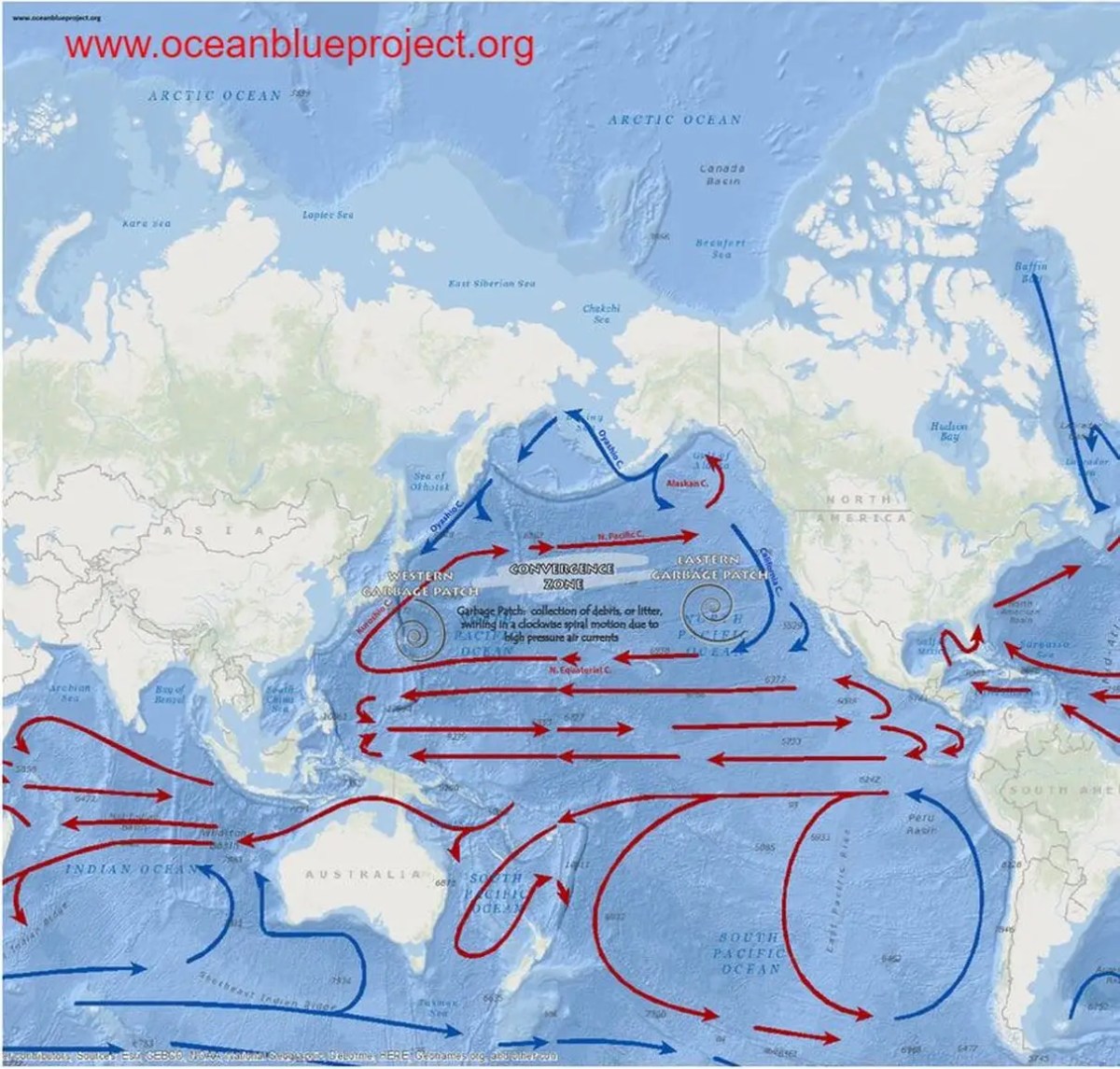
Out in the vast expanse of the Pacific Ocean, far from coastlines, shipping lanes, and everyday human awareness, floats one of the most troubling environmental realities of our time: the Great Pacific Garbage Patch. Often described as a floating island of trash, it is actually something far more complex and far more dangerous.
The Great Pacific Garbage Patch is not a solid mass you can stand on. It is a vast accumulation of floating plastic and marine debris trapped by ocean currents. Understanding what it is, how it formed, and why it matters helps put the larger crisis of ocean plastic pollution into focus.
What Is the Great Pacific Garbage Patch?
The Great Pacific Garbage Patch is a large zone of marine debris located between Hawaii and California. It exists within the North Pacific Subtropical Gyre, a system of rotating currents that pulls floating material into a concentrated area.
Rather than forming a visible island, the patch is more like a soup of plastic. It contains everything from abandoned fishing nets and ropes to bottle caps, packaging fragments, and microplastics. Some debris floats on the surface, while much of it is suspended just below.
Scientists estimate that the patch spans roughly 1.6 million square kilometers, making it one of the largest concentrations of ocean plastic on Earth.
To better understand how this accumulation happens, see our guide on how ocean currents trap plastic.
How Did It Form?
The Great Pacific Garbage Patch formed over decades through the combination of human waste and natural ocean circulation.
Ocean currents concentrate debris
The Pacific Ocean is constantly in motion. Winds, Earth’s rotation, and large-scale current systems create circular movement patterns called gyres. In the North Pacific, those currents slowly gather floating debris into one general region, where it remains trapped for long periods of time.
Plastic does not go away
Unlike natural materials, plastic does not fully biodegrade in the ocean. Instead, sunlight, saltwater, and wave action break it into smaller and smaller pieces. That means even when plastic “disappears,” it remains in the environment as tiny fragments.
These fragments contribute to the growing threat of microplastics in the ocean.
Most plastic starts on land

A large share of ocean plastic begins on land. Wind, rain, storm drains, and rivers carry waste into bays, coastlines, and eventually the open sea. Additional debris comes from offshore sources like cargo ships and commercial fishing operations.
Discarded fishing gear is especially important in the Great Pacific Garbage Patch because it makes up a large portion of the bigger, heavier debris. You can explore this further in our article on where ocean plastic comes from.
What Does It Actually Look Like?
One of the biggest misconceptions about the Great Pacific Garbage Patch is that it looks like a dense raft of trash. In reality, much of it is nearly invisible at first glance.
If you sailed through it, the ocean might still appear mostly open and blue. That is because:
- much of the plastic is small or microscopic
- debris is spread across a huge area
- many particles sit below the surface rather than floating in obvious piles
The most dangerous part of the patch is often what cannot be seen. A single scoop of water can contain countless plastic fragments. Over time, larger items break apart and become even harder to remove.
For more on this process, read how plastic degrades in the ocean.
Why Is It a Problem?
The Great Pacific Garbage Patch is not only an eyesore or a symbol. It is a serious ecological problem with consequences for wildlife, habitats, and human communities.
Harm to marine life
Marine animals often mistake plastic for food. Sea turtles may confuse plastic bags for jellyfish. Seabirds feed plastic fragments to their chicks. Fish and marine mammals can ingest or become entangled in abandoned gear and floating debris.
This can lead to starvation, internal injury, infection, reduced mobility, and death. Learn more in how plastic affects marine animals.
Microplastics in the food chain
As plastic breaks down, it becomes small enough to be consumed by plankton, shellfish, and small fish. From there, it moves up the food web into larger predators. Eventually, microplastics can end up in the seafood people eat.
This raises growing concern around microplastics and human health.
Damage to ecosystems
Plastic debris can smother habitats, disrupt coastal ecosystems, and even transport invasive species across oceans. Organisms can hitch a ride on floating plastic and arrive in places where they do not belong, threatening biodiversity.
Economic consequences
Plastic pollution affects tourism, fisheries, and coastal communities. It increases cleanup costs, damages equipment, and undermines the health of the ecosystems that support local economies. These impacts are closely connected to broader failures in plastic waste management.
Common Myths About the Garbage Patch
Myth: It is a solid island of trash
It is not a solid island. It is a massive area of dispersed debris, much of it in tiny pieces.
Myth: You can see it from space
The plastic is too spread out and too small to appear as a distinct object in satellite images.
Myth: It is the only one
The Great Pacific Garbage Patch is the most famous, but it is not the only garbage patch. There are multiple large accumulation zones in the world’s oceans. Learn more in global ocean garbage patches explained.
Can It Be Cleaned Up?
Cleaning the Great Pacific Garbage Patch is incredibly difficult. The affected area is enormous, and much of the pollution consists of tiny particles mixed into the upper layers of the ocean.
Some organizations are developing technologies to capture larger floating debris, including nets and durable plastic pieces. These efforts are valuable, but they cannot solve the full problem on their own, especially when microplastics are already widely dispersed.
That is why many experts point to prevention as the most effective long-term solution. See more in ocean plastic cleanup technologies.
Prevention Is the Real Solution
The most effective way to reduce ocean plastic pollution is to stop plastic before it reaches open water.
That means reducing single-use plastic, improving waste systems, intercepting debris in rivers and stormwater channels, and changing how products are designed, used, and disposed of.
It also means investing in local cleanup work where plastic first enters the environment. For practical ways to help, visit how to reduce plastic pollution.
From Awareness to Action: Cleaning Plastic Where It Starts
While large offshore cleanup efforts are important, some of the most meaningful progress happens closer to shore, before plastic becomes part of an offshore accumulation zone.
That is where Ocean Blue Project’s work stands out.
Instead of focusing only on the middle of the ocean, Ocean Blue Project works where plastic first enters the marine environment, along beaches, shorelines, bays, and coastal communities. This source-focused approach helps stop debris before it breaks apart into microplastics or gets carried into larger current systems.
Cleaning where plastic starts
Much of the plastic that ends up in the ocean begins as local litter. A bottle dropped inland can move through drains, creeks, rivers, bays, and eventually into the sea. By removing debris earlier in that chain, Ocean Blue Project helps reduce the volume of plastic that ever reaches offshore gyres.
This includes work in:
- beaches and shorelines
- bays and river mouths
- community cleanup zones
- coastal areas vulnerable to repeated plastic buildup
You can connect this work with broader local action through community beach cleanup programs.
Protecting bays and coastal ecosystems
Bays and coastal waters are some of the richest ecosystems on the planet, but they are also some of the most vulnerable to plastic pollution. Removing debris in these environments protects wildlife, reduces habitat damage, and lowers the amount of plastic available to fragment into microplastics.
This is why coastal conservation efforts are such a critical line of defense.
Building long-term change
The value of this work is not only in what gets removed. It is also in what gets prevented. Community engagement, education, and volunteer action all help shift behavior and strengthen stewardship over time.
That is how local cleanup becomes lasting environmental change.
A Cleaner Ocean Starts Here
The Great Pacific Garbage Patch is a powerful reminder of what happens when plastic pollution goes unchecked. But it also points toward a better path forward.
Real solutions do not begin only in the middle of the ocean. They begin upstream, along coastlines, in bays, on beaches, and in communities willing to act before waste drifts out of sight.
By cleaning where plastic starts, and by protecting the bay and ocean before pollution spreads, Ocean Blue Project reflects one of the most practical and hopeful strategies available today.
Because the future of the ocean will not be shaped only by what we remove from it. It will be shaped by what we keep from entering it in the first place.
Want to be part of the solution?
Plastic pollution doesn’t start in the ocean—but it ends there.
Every piece removed is a step toward protecting marine life.
